Leo F. Drummond
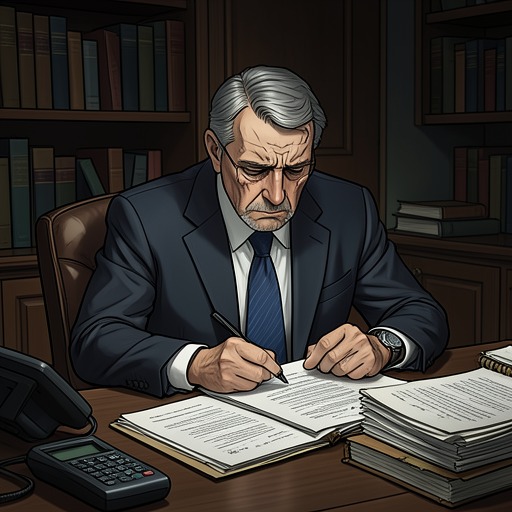
The RainmakerLeo F. Drummond is a senior partner at Tinley Britt and Great Benefit’s lead counsel in the Black family’s suit over the denial of Donny Ray Black’s bone marrow transplant. A celebrated, experienced advocate, he enters the case expecting his legal skill and the company’s resources to control its course. Instead, the litigation exposes the limits of polished advocacy when a client’s records and conduct become evidence, and when Rudy Baylor refuses to settle quietly.
Identity and Professional Standing
Drummond is described as a marvelous trial lawyer, experienced in commercial litigation and rarely defeated. At the first hearing in the Black case, he identifies himself as counsel for Great Benefit Life and objects to Rudy’s appearance because Rudy has passed the bar exam but has not yet received his license. His objection is a technically framed challenge to an inexperienced opponent’s right to speak for the plaintiffs, delivered in the courtroom with the confidence of a lawyer accustomed to command.
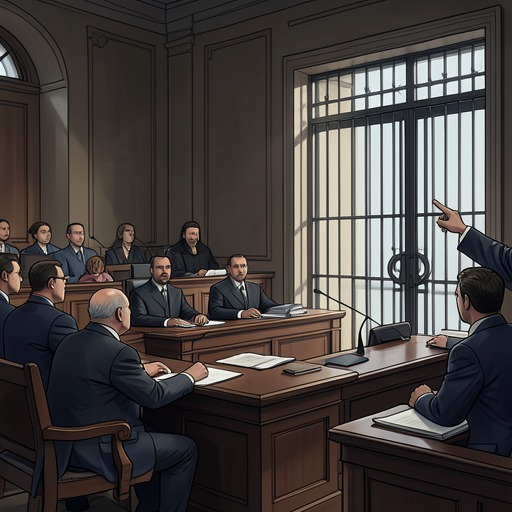
His position is backed by considerable institutional strength. At a later hearing, Drummond sits at the center of a five-person defense team, flanked by colleagues with decades of combined experience. Rudy, recently licensed and working without comparable support, sees the imbalance plainly. Drummond’s courtroom manner and the scale of the team make him a visible representative of the corporate resources arrayed against the Black family.
Tactics in the Black Case
Drummond’s approach joins procedural pressure to settlement calculation. Great Benefit answers the complaint with a motion to dismiss supported by a sixty-three-page brief, a move Rudy experiences as the opening of a paper war. The filings are not merely legal argument: they consume time, require work from the opposing side, and delay the trial. Drummond’s firm can distribute that labor among lawyers and paralegals, while Rudy must respond largely on his own.
At the initial hearing, Drummond objects to Rudy’s participation before his license arrives. After Judge Harvey Hale indicates that he is inclined to dismiss the suit, Drummond uses the private conference that follows to explain the company’s expected cost of taking the case to trial. He says Great Benefit has authorized a seventy-five-thousand-dollar settlement offer, available for only forty-eight hours. The offer presents settlement as an economic alternative to litigation and publicity, even as Hale’s apparent willingness to dismiss the case puts pressure on Rudy from the bench.
Rudy later tells Drummond that the clients have rejected the offer. Drummond warns that refusal means war, but does not raise the amount. After Judge Hale’s death, the case remains active because no dismissal order was signed. Drummond again receives Rudy’s refusal, this time after Rudy explains that the decision belongs to the clients. Their exchange establishes a continuing conflict over who gets to decide what the case is worth: the defense lawyer offers a sum; the plaintiffs, through Rudy, insist that the claim cannot be reduced to that sum.
The discovery process further unsettles Drummond’s position. During Dot Black’s deposition, Rudy arranges for her to present the company’s insulting eighth denial letter without first explaining its contents. Drummond reads it and is visibly taken aback; his response convinces Rudy that he has not seen the letter before. Judge Tyrone Kipler notices the reaction and warns that Great Benefit and its counsel will face sanctions if documents are concealed. Drummond asks Kipler to recuse himself, but the request is denied. The episode shifts the pressure: a document meant to be evidence against the insurer also becomes an immediate test of whether its lawyers can account for the client’s production of records.
Negotiation, Trial, and Reversal
Kipler later orders Great Benefit executives to appear for depositions after problems arise over the company’s handling of witnesses and documents. Drummond is required to answer for his client’s conduct in court, even while Rudy suspects that the insurer, rather than its outside counsel, is responsible for the gamesmanship. The judge’s orders impose real costs on the defense and make clear that discovery will not be allowed to drift indefinitely.
After the executives have testified, Drummond and M. Wilfred Keeley invite Rudy to Drummond’s office to negotiate. They say Kipler concerns them and describe the proceedings as unfair. Drummond offers to double the earlier settlement, raising it to $150,000. Rudy replies that Donny Ray is dead and that the case is being pursued to expose what Great Benefit did, not simply to obtain a payment. Drummond presses him to find out what Dot wants; Rudy says there is nothing the company can do to undo the death. The exchange makes the moral and strategic divide explicit: the defense continues to negotiate in dollars, while Rudy presents the trial as a demand for public accountability.
At trial, Drummond initially frames the dispute around the written policy and the cost of the transplant, arguing that the policy did not cover bone marrow transplants and that the plaintiffs are seeking both the treatment cost and excessive punitive damages. The argument relies on the policy’s silence and casts the Black family’s claim as unreasonable. But the policy did not expressly exclude bone marrow transplants, and Great Benefit’s revised policy later included such language. The gap between the old policy and the defense’s categorical position gives Rudy a central point of attack.
The evidence also widens beyond the individual claim. Jackie Lemancyzk testifies that Great Benefit denied every claim over $1,000 during a twelve-month experiment beginning in 1991, regardless of whether it was legitimate. She says the scheme generated roughly $40 million in additional funds and that the Black claim remained denied after the company recognized that the policy did not exclude the transplant. Drummond must contend with testimony, concealed records, and the company’s own figures. When Rudy asks insurance-industry witness Payton Reisky about the industry funding behind his organization, Drummond objects, but Kipler allows the questioning. The defense’s effort to contain the case cannot prevent the jury from hearing about the larger claims-denial system.
Verdict and Aftermath
In closing, Drummond changes emphasis. He apologizes for his performance during jury selection, acknowledges that Great Benefit made serious mistakes, and admits that the Black claim should have been paid. He describes the offensive denial letters as unacceptable but characterizes the company’s failures as mistakes made within a large organization, rather than deliberate wrongdoing. He argues against a large punitive award and offers the jury a way to treat $200,000 as adequate compensation for the transplant that Donny Ray never received.
Rudy answers that Great Benefit had not admitted the claim was wrong when the jury first heard the case; its humility, he argues, comes only after the evidence has been exposed. He tells the jurors that if they do not believe the company deserves punishment, they should keep the $200,000 rather than award it as a compromise. The jury returns a fifty-million-dollar verdict, far exceeding the defense’s settlement offers and the amount Great Benefit was willing to concede at trial.
The verdict brings a second professional conflict. Before trial, Rudy had offered to settle for $1.2 million. Great Benefit later claims that it would have seriously considered paying that amount and accuses Drummond of failing or refusing to convey the offer. The company fires Drummond and Tinley Britt, and a malpractice claim is discussed. Kipler asks Rudy to provide an affidavit describing what happened. The accusation leaves Drummond’s conduct in dispute, but Great Benefit’s subsequent bankruptcy changes the stakes: as Rudy later learns from Drummond, the company is in no condition to pursue the malpractice action, and it has effectively avoided paying the Black verdict. The case’s financial collapse therefore blunts the apparent prospect of a final legal reckoning for either side.
Narrative Role
Drummond is not simply a courtroom foil to Rudy. He embodies the professional machinery available to a wealthy corporate defendant: extensive staffing, carefully prepared briefs, procedural objections, and offers calibrated against the cost and risk of trial. Those tools make him formidable, but they also reveal how litigation resources can be used to exhaust an opponent and postpone scrutiny. His courtroom expertise cannot erase the documents or keep the insurer’s internal practices from emerging through testimony.
His changing posture tracks the case’s reversal. He begins by challenging Rudy’s authority and deploying the defense’s advantage in paper and personnel; he then tries to buy peace through successive offers; at trial, he concedes that the claim should have been paid while disputing the scale and meaning of the wrongdoing. The final complaint that he mishandled Rudy’s $1.2 million offer adds an irony to his role: the advocate who calculated the cost of defending the case becomes a target of his own client after the jury’s verdict. Yet the company’s bankruptcy prevents that reversal from becoming a straightforward victory for the plaintiffs, leaving Drummond’s personal liability uncertain and the Black family’s award difficult to collect.